
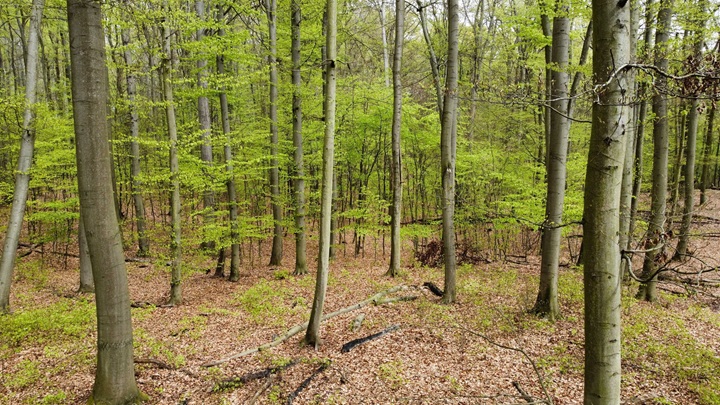
How do trees balance the number and quality of seeds during mast years? In our new paper in New Phytologist, led by Kasia Kondrat, we tested this question in European beech using data from 2,792 trees across 123 populations. Contrary to the expectation that producing more seeds should reduce investment per seed, high-seeding years produced heavier seeds. However, seed chemistry changed: protein content declined with increasing seed production, while lipid content increased. We also found that seed mass and protein content were lowest toward the climatic margins of the species’ range. Read the paper here!
This paper is a product of the European Beech Reproduction Network, a collaborative initiative coordinated by our lab to monitor beech reproduction across Europe using a standardized, lightweight field protocol. The network was established to understand how seed production, pollination, seed predation, tree size, and climate interact across the species’ range. This study shows the value of coordinated continental-scale sampling for answering questions that cannot be addressed from single sites or regions alone.
We are continuing to expand the network and welcome new collaborators with access to European beech populations! Please, get in touch if interested.